Reading time: 7 min | Last updated: June 2026 | Author: Pets Sparkle Team
Table of Contents
1. The One Rule That Changes Everything
2. Wand Toys: The Undisputed Champion
3. Automatic Toys: Useful, But Not a Replacement
4. Puzzle and Foraging Toys
5. Solo Toys That Actually Work
6. What to Avoid
7. FAQ
You spent £18 on an interactive cat toy that now lives under the sofa. Your cat, meanwhile, is playing with a hair tie they found in the bathroom.
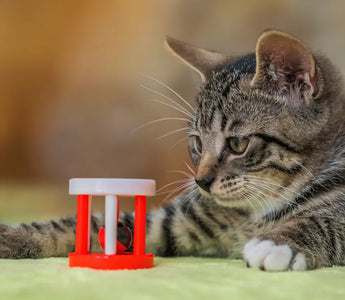
Sound familiar? The toy isn't the problem — or at least, not entirely. The way cats engage with toys is species-specific and reasonably predictable once you understand the mechanics of feline hunting instinct. Almost any cat will engage with almost any toy if it moves correctly. Almost no cat will engage with a toy that sits still on the floor waiting to be noticed.
Interactive play that engages the stalk-pounce sequence is the most important form of enrichment for indoor cats — more impactful than passive toys or environmental furniture alone. Let's fix your toy situation.
The One Rule That Changes Everything
Move the toy away from the cat.
That's it. That's the rule. Movement toward a cat reads as threat. Movement away reads as prey. The entire hunt drive is wired around pursuit, not confrontation.
Drag the feather along the floor at the edge of their vision. Dart it around a corner. Slow it down, then suddenly speed up. Let them almost catch it — then escape. This is a hunt, not a gift.
Every toy recommendation below is only effective if you use it this way. The hardware matters less than the technique.
Wand Toys: The Undisputed Champion
A good feather wand toy operated by a human beats every automatic toy on the market. Full stop. The unpredictability is real, the range of motion is unlimited, and the prey-like behavior is genuinely convincing to a brain that hasn't changed since their wild ancestors hunted actual birds.
What makes a good wand toy:
- Long wand (3–4 feet) — you need range of movement
- Feather or crinkle material at the end — visual and auditory triggers both matter
- Durable attachment point — cheap versions lose the toy within a week
How to use it: Two 10–15 minute sessions per day. End each session by letting the cat "catch" the prey and delivering a small treat — this completes the stalk-pounce-catch-eat sequence and prevents the frustrated hunting energy that keeps cats wound up after play.
Explore cat toys in the Pets Sparkle Cats Collection.
Automatic Toys: Useful, But Not a Replacement

Novelty drives cat engagement. A new toy is interesting. The same toy that's been out for three weeks? Furniture. Rotate toys regularly.
Automatic toys — robotic mice, spinning feather arms, laser pointers — serve a real purpose when you genuinely can't play actively. The limitation: cats clock predictable patterns quickly and stop engaging. The fix is novelty rotation — the automatic toy comes out for one session, then disappears for a few days. When it reappears, it's interesting again.
Laser pointers specifically: endlessly engaging, genuinely fun to watch — but always end the laser session by directing it to a physical toy the cat can actually catch. Laser-only play leaves the hunt sequence incomplete and can create obsessive behavior.
Puzzle and Foraging Toys
Puzzle feeders engage the foraging instinct rather than the hunt drive, but they're equally important for mental stimulation. Replacing even one bowl feeding per day with a puzzle feeder or lick mat provides 10–20 minutes of focused cognitive engagement.
Cat-specific note: Dog puzzle feeders don't work for most cats. The grooves are too deep, and whisker fatigue from pressing into narrow bowls makes them uncomfortable. Cat-appropriate feeders need shallower profiles with wider access. Start with a flat lick mat spread with wet food — lowest barrier to entry, immediately effective.
See our Cat Slow Feeder Guide for cat-specific options, and browse the Pets Sparkle Slow Feeders Collection for shallow-profile designs that actually work for cats.
Solo Toys That Actually Work
For times you're not there or can't play actively:
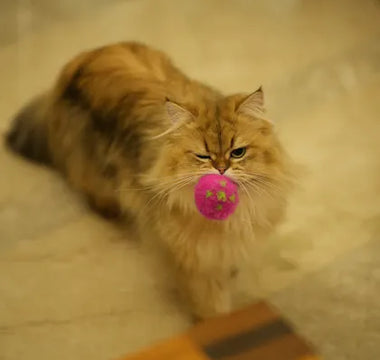
- Crinkle balls — cheap, lightweight, move unpredictably when batted, satisfying sounds. Cats reliably engage more with these than expensive electronic alternatives.
- Small fur-covered mice — the texture and weight approximate real prey well enough to trigger carry-and-shake behavior.
- Tunnels — crinkle tunnels for darting into and out of. Engages the hide-and-ambush instinct. Cheap. Consistently underrated.
- Cardboard boxes — free. Always worth having one out. Cut a few holes in the sides and it becomes a hunt environment.
- Catnip or silver vine toys — roughly 50–60% of cats have the catnip response (it's genetic). Silver vine works for many catnip-immune cats.
What to Avoid
- Leaving all toys out permanently — familiarity kills engagement. Rotate. Put most toys away and swap every few days.
- Playing right after feeding — play before meals to complete the natural hunt-catch-eat sequence, not after.
- Forcing interaction — if a cat walks away, stop. Let the "prey" escape. They'll return on their own terms.
- Laser-only play — always end with something physical to catch.
FAQ
Q: What interactive toys do cats actually use?
Feather wands (human-operated), crinkle balls, small fur mice, puzzle feeders. Anything that moves unpredictably or requires effort wins over anything static and predictable.
Q: How long should I play with my cat each day?
Two 10–15 minute sessions — morning and evening. Maps onto their natural activity peaks. Consistency beats duration.
Q: Why does my cat ignore toys?
Move them away, not toward. Retreat, pause, dart. The prey instinct activates for things that run. Also rotate — familiar toys get ignored.
Q: Are automatic cat toys worth it?
As a supplement, yes. Not as a replacement for interactive play. Rotate them to maintain novelty — cats clock predictable patterns fast.
Q: Should I use a laser pointer?
Yes, but always follow up with a physical toy the cat can catch. Laser-only play leaves the hunt sequence incomplete.
Key Takeaways
- The single biggest predictor of success is owner consistency — doing the routine daily even on days you don't see immediate change.
- Mental enrichment matters as much as physical exercise. Both together produce results that neither delivers alone.
- For ongoing or severe issues, working with a vet adds tools (medication, behavioral protocols) that home interventions can't match.
- Most owners see meaningful improvement in 6–8 weeks of consistent work.
Related Posts
- Complete Cat Enrichment Guide
- Slow Feeders for Cats
- How to Keep an Indoor Cat Mentally Stimulated
- Best Cat Beds
About the Author
Pets Sparkle Editorial Team — Pet enrichment and care specialists with 5+ years of research, product testing, and content experience. Every guide is reviewed against current veterinary and behavioural science guidelines. | petssparkle.com
Sources: ASPCA — Cat Care · AKC — Cat Health