Reading time: 6 min | Last updated: June 2026 | Author: Pets Sparkle Team
Table of Contents
1. The Real Safety Risks of Dog Hoodies
2. When Dog Hoodies Are Genuinely Beneficial
3. Safe Dog Hoodie Checklist
4. Signs Your Dog Is Uncomfortable
5. FAQ
Dog hoodies are one of the most popular pet items worldwide — and with that popularity comes a reasonable question: are they actually safe?
The answer is yes — with the right hoodie, correct fit, and appropriate conditions. According to the AKC, clothing on dogs is safe when it fits properly, doesn't cause overheating, and is introduced positively. Here's the complete picture.
The Real Safety Risks of Dog Hoodies
Before dismissing concerns as overblown, it's worth acknowledging that poorly made or poorly fitted hoodies do carry real risks.
Before dismissing concerns as overblown, it's worth acknowledging that poorly made or poorly fitted hoodies do carry real risks.
Overheating
The most common real risk. Dogs release heat through panting and paw pads — not through sweating across skin. A thick hoodie in warm weather traps heat and prevents cooling. This can cause dangerous hyperthermia, especially in brachycephalic breeds who already struggle with thermoregulation.
The rule: Hoodies are for cold or cool weather. Remove them indoors if the house is warm. Never use on hot days or above 60°F/15°C for sensitive breeds.
Restricted Movement
A hoodie too tight across the chest or armholes restricts natural gait and causes discomfort, chafing, and stress. Dogs adapt their movement to avoid pain, which can strain muscles over time.
The rule: Always measure chest girth — the widest point just behind the front legs — before buying. When between sizes, always size up. See our Dog Clothing Size Guide.
Drawstrings and Loose Hardware
Drawstrings around hoods can catch on fencing, branches, or crate bars — a genuine strangulation risk. Metal toggles, zippers, and decorative hardware can be chewed free and swallowed.
The rule: Choose hoodies specifically designed for dogs. Pet-specific designs eliminate drawstrings and use secure, non-removable hardware.
Fabric Irritation
Low-quality synthetics can cause skin irritation, particularly in dogs with sensitive skin or existing allergies.
The rule: Choose breathable, soft fabrics — cotton blends, fleece, or jersey. Avoid rough synthetics as the inner layer.
When Dog Hoodies Are Genuinely Beneficial
For the right dog in the right conditions, a hoodie provides real benefit:
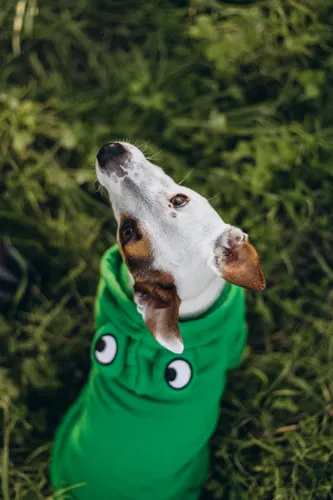
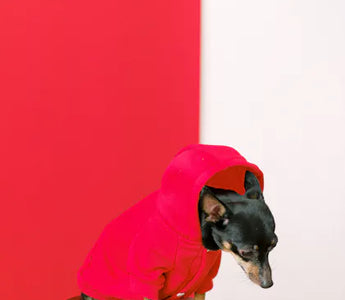
Thin-coated small breeds like Jack Russells genuinely benefit from an insulating layer on cold morning walks.
For the right dog in the right conditions, a hoodie provides real benefit:
Thin-coated breeds in cold weather: Chihuahuas, Greyhounds, Whippets, and Italian Greyhounds have very little natural insulation. According to the ASPCA, signs a dog is genuinely cold include shivering, slowing down, lifting paws, and hunching over — all of which a warm hoodie prevents.
Calming effect for anxious dogs: The gentle, consistent pressure of a well-fitted, snug hoodie can produce a mild calming effect in some dogs — similar to the mechanism of anxiety wraps.
Post-clip or post-surgery recovery: Dogs who've been shaved for surgery or grooming lose natural insulation temporarily. A light hoodie helps maintain body temperature during recovery.
Brachycephalic breeds on cold short outings: French Bulldogs and Pugs that struggle with full-length raincoats often tolerate a fitted hoodie well for brief cold-weather outings.
Safe Dog Hoodie Checklist
When evaluating any dog hoodie, verify: - ✅ No drawstrings — hoods should be purely decorative or have fixed flat edges - ✅ Stretchy, breathable fabric — allows natural movement and temperatur…
When evaluating any dog hoodie, verify:
- ✅ No drawstrings — hoods should be purely decorative or have fixed flat edges
- ✅ Stretchy, breathable fabric — allows natural movement and temperature regulation
- ✅ Wide armhole openings — no restriction of front leg movement or stride
- ✅ Secure hardware — buttons and zippers that can't be chewed free
- ✅ Belly strap or elastic band — keeps the hoodie in place without tight binding
- ✅ Machine washable — hoodies get dirty quickly; washability is a hygiene necessity
- ✅ Dog-specific sizing — not human baby clothes repurposed for dogs
The Adidog BarkFit Hoodie is engineered against all of these criteria: no drawstrings, stretchy breathable fleece-blend construction, wide chest cut for natural movement, and machine-washable design built for regular use.
Signs Your Dog Is Uncomfortable
Even the best hoodie isn't right for every dog.
Even the best hoodie isn't right for every dog. Watch for:
- Freezing or refusing to move — the dog is overwhelmed. Remove immediately.
- Tucked tail and lowered body — classic stress body language under the clothing
- Constant removal attempts — pawing at it, rolling, rubbing, attempting to bite the fabric
- Stiff, altered gait — high-stepping, slow motion, or avoiding putting weight on front legs normally
- Excessive panting when it isn't warm — stress signal, not temperature regulation
If you see consistent discomfort, the fit is wrong or this dog genuinely dislikes clothing. A different style often completely changes the response — or start with a bandana instead, which has a much lower tolerance threshold. See the Complete Guide to Dressing Your Dog for the full positive introduction protocol.
FAQ
Q: Are dog hoodies safe?
Yes — with correct fit, breathable fabric, and use in appropriate cold conditions. The main risks (overheating, restricted movement, drawstrings) are all preventable with the right product choice.
Q: Which dogs benefit most from hoodies?
Thin-coated breeds (Greyhounds, Chihuahuas), small toy breeds, brachycephalic breeds (French Bulldogs, Pugs), senior dogs, puppies, and post-surgery dogs.
Q: How do I know if the fit is correct?
Free natural movement in all four legs, no restriction at chest or neck, no alteration of gait. Fit two fingers under any edge comfortably.
Q: What are the signs my dog is uncomfortable?
Freezing, tucked tail, constant removal attempts, altered stiff gait, and excessive panting when it's not warm. Any of these means remove the hoodie and reassess.
Q: Can a dog sleep in a hoodie?
Generally no — remove it before sleep. If the dog is cold at night, a dog sleep blanket or bolstered bed is a safer solution.
Key Takeaways
- The single biggest predictor of success is owner consistency — doing the routine daily even on days you don't see immediate change.
- Mental enrichment matters as much as physical exercise. Both together produce results that neither delivers alone.
- For ongoing or severe issues, working with a vet adds tools (medication, behavioral protocols) that home interventions can't match.
- Most owners see meaningful improvement in 6–8 weeks of consistent work.
Related Posts
- Complete Guide to Dressing Your Dog
- How to Measure Your Dog for Clothes
- Do Dogs Like Wearing Clothes?
- Best Dog Hoodies for Winter
About the Author
Pets Sparkle Editorial Team — Pet enrichment and care specialists with 5+ years of research, product testing, and content experience. Every guide is reviewed against current veterinary and behavioural science guidelines. | petssparkle.com
Sources: AKC — Dog Clothes: Do Dogs Need Them? · ASPCA — General Dog Care