Reading time: 7 min | Last updated: June 2026 | Author: Pets Sparkle Team
Table of Contents
1. What You'll Need
2. The Three Key Measurements
3. Breed-Specific Size Reference Chart
4. What to Do When Between Sizes
5. Tips for Difficult Body Shapes
6. Getting Your Dog to Cooperate
7. FAQ
The most common reason dog clothing gets returned — or causes discomfort — is incorrect sizing. Pet clothing doesn't follow standard size conventions, sizing varies between brands, and dogs have unique body proportions that make "S/M/L" labels unreliable without actual measurements.
This guide gives you the exact three measurements to take, how to take them correctly, and a size reference chart for major breeds.
What You'll Need
Quick answer: A soft fabric measuring tape (the kind used for sewing — not a rigid metal tape) - A helper to keep the dog still, ideally - Treats to reward cooperation at every step - A pen or phone to record m…
- A soft fabric measuring tape (the kind used for sewing — not a rigid metal tape)
- A helper to keep the dog still, ideally
- Treats to reward cooperation at every step
- A pen or phone to record measurements immediately
The Three Key Measurements

The three measurement points — neck, chest, and back length — form the complete sizing picture for any dog clothing purchase.
1. Neck Circumference
What: The circumference around the base of the neck where a collar sits.
How: Wrap the tape around the base of the neck. Hold it snug but not tight — you should slip two fingers underneath comfortably. Record the measurement and add 1 inch for comfort.
Why it matters: Determines whether the neckline of a shirt or hoodie will be comfortable. Too tight restricts breathing; too loose lets the garment slide forward and obstruct vision.
2. Chest Girth ← MOST IMPORTANT
What: The circumference around the widest point of the ribcage.
How: Find the widest point — usually just behind the front legs and armpits. Wrap the tape all the way around, keeping it level (parallel to the floor). Hold it snug without compressing. Add 2 inches for free movement.
Why it matters: This single measurement determines sizing in most cases. According to the AKC, restriction across the chest is the most common fitting error and the most harmful — it restricts both movement and breathing. When between sizes, always size up here.
3. Back Length
What: The length from the base of the neck to the base of the tail.
How: Start at the point where the collar meets the neck (at the base). Run the tape straight down the spine to where the tail begins. Don't include the tail itself.
Why it matters: Determines whether a garment covers the torso appropriately. Too short leaves the back exposed; too long bunches up between the hind legs and causes rubbing.
Breed-Specific Size Reference Chart
| Breed | Neck (approx) | Chest (approx) | Back Length (approx) | Typical Size |
|---|---|---|---|---|
| Chihuahua | 8–10" | 12–14" | 7–9" | XS |
| Yorkshire Terrier | 9–11" | 13–15" | 7–9" | XS |
| Shih Tzu | 11–13" | 15–18" | 9–11" | S |
| French Bulldog | 14–18" | 18–24" | 10–12" | S–M |
| Pug | 13–16" | 17–22" | 10–12" | S–M |
| Beagle | 14–16" | 18–23" | 12–14" | M |
| Cocker Spaniel | 14–16" | 18–24" | 13–15" | M |
| Border Collie | 16–20" | 22–28" | 18–22" | L |
| Labrador Retriever | 18–22" | 26–32" | 20–24" | L–XL |
| German Shepherd | 20–24" | 28–34" | 22–26" | XL |
| Golden Retriever | 18–22" | 26–32" | 20–24" | L–XL |
| Great Dane | 24–28" | 30–36" | 26–32" | XXL |
Approximate reference ranges only. Individual dogs vary significantly within breeds — always measure your specific dog.
What to Do When Between Sizes
Always size up. A garment that's slightly long can be tolerated; a garment too tight across the chest is uncomfortable and potentially harmful.
Exception for Dachshunds and long-bodied breeds: If your dog has a long back but small chest girth, size by chest and accept the shorter-than-ideal length. This is safer than the alternative.
Tips for Difficult Body Shapes
Brachycephalic breeds (Bulldogs, Pugs, French Bulldogs): Wide chests and short necks mean their chest girth is often one or two sizes larger than their back length would suggest. Always prioritize chest girth over any other measurement.
Dachshunds: Long back, short legs, proportionally wide chest. Look for "dachshund cut" or "long body" designs that specifically accommodate this proportion.
Greyhounds and Whippets: Very deep but narrow chest, slim neck. Regular sizing fits too loosely in the chest for this body type. Look for "sighthound cut" styles designed for this silhouette.
Puppies: Measure every 4–6 weeks during the growth period. Buy one size ahead for fast-growing breeds to extend garment usefulness.
Getting Your Dog to Cooperate
Measure right after a walk when the dog is calmer and more settled - Have a helper offer high-value treats while you take measurements - Move quickly and calmly — reward generously after each measurement is complete - If the dog is very wiggly, take each measurement twice and use the average Now that you have your measurements, compare them against the specific product's size chart.
- Measure right after a walk when the dog is calmer and more settled
- Have a helper offer high-value treats while you take measurements
- Move quickly and calmly — reward generously after each measurement is complete
- If the dog is very wiggly, take each measurement twice and use the average
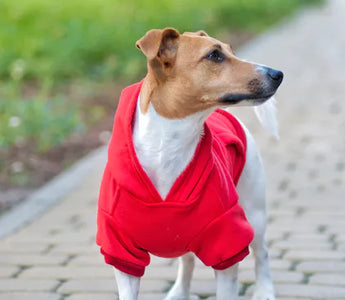
Now that you have your measurements, compare them against the specific product's size chart. Browse the full range of dog clothing at the Pets Sparkle Dog Clothing Collection, including the Adidog BarkFit Hoodie available in multiple sizes with detailed fit guidance.
FAQ
Size by chest girth and expect the back length to be shorter than ideal.
Q: What's the most important measurement for dog clothing?
Chest girth — the circumference around the widest point of the ribcage. Always size up when between sizes on this measurement.
Q: How do I measure a Dachshund?
Size by chest girth and expect the back length to be shorter than ideal. Look for long-body or dachshund-cut designs.
Q: What if my dog is between sizes?
Always size up. A slightly long garment is tolerable; a tight-chested one is harmful.
Q: Do I need to re-measure every time I buy clothing?
For adult dogs, re-measure every 6–12 months or after any weight change. For puppies, re-measure every 4–6 weeks. Always compare against the specific brand's size chart — sizing varies between manufacturers.
Q: How do I measure a Greyhound or Whippet?
Measure chest girth carefully and look specifically for sighthound-cut designs. Standard sizing nearly always fits wrong on this body type regardless of measurements.
Key Takeaways
- The single biggest predictor of success is owner consistency — doing the routine daily even on days you don't see immediate change.
- Mental enrichment matters as much as physical exercise. Both together produce results that neither delivers alone.
- For ongoing or severe issues, working with a vet adds tools (medication, behavioral protocols) that home interventions can't match.
- Most owners see meaningful improvement in 6–8 weeks of consistent work.
Related Posts
- Complete Guide to Dressing Your Dog
- Are Dog Hoodies Safe?
- Best Dog Hoodies for Winter
- Do Dogs Like Wearing Clothes?
About the Author
Pets Sparkle Editorial Team — Pet enrichment and care specialists with 5+ years of research, product testing, and content experience. Every guide is reviewed against current veterinary and behavioural science guidelines. | petssparkle.com
Sources: AKC — Dog Clothes: Do Dogs Need Them? · ASPCA — General Dog Care