Reading time: 12 min | Last updated: June 2026 | Author: Pets Sparkle Team
Table of Contents
- Do Dogs Actually Need Clothes?
- Is Dressing Your Dog Safe?
- How to Measure Your Dog for Clothing
- Dog Fashion Trends in 2026
- How to Get Your Dog Comfortable with Clothing
- Dog Clothing by Season
- Quick Reference: Which Dogs Need What
- FAQ
Dog clothing has come a long way from novelty costumes and holiday sweaters. The global pet clothing market exceeded $6.5 billion in 2025, and in 2026 dressing your dog is a legitimate intersection of style, function, and pet wellbeing — not just a social media quirk.
But with that growth comes real questions: Which dogs actually benefit from clothing? What are the safety rules? How do you size correctly? And what's actually trending?
This guide covers all of it.
Do Dogs Actually Need Clothes?
The honest answer: some do, some don't — and it depends entirely on the individual dog.
Dogs That Genuinely Benefit from Clothing
Short-haired and thin-coated breeds — Greyhounds, Whippets, Chihuahuas, Dachshunds, and French Bulldogs have minimal natural insulation.
Brachycephalic breeds in heat — Bulldogs, Pugs, and French Bulldogs struggle to regulate temperature in hot weather. Cooling vests prevent dangerous overheating.
Puppies and senior dogs — Both regulate body temperature less efficiently than healthy adult dogs. Light layers in cold or wet conditions provide real thermal support.
Post-surgical recovery — Recovery suits and surgical shirts protect wounds from licking and irritation. These are medically useful, vet-recommended garments.
Anxiety-prone dogs — The gentle, consistent pressure of a well-fitted anxiety wrap has documented calming effects for many dogs.
Dogs That Don't Need Clothes
Double-coated northern breeds — Huskies, Malamutes, Bernese Mountain Dogs — already have exceptional natural insulation. They generally don't need additional layers and may overheat in typical weather conditions.
That said: if a dog tolerates clothing positively and the owner wants to dress them, there's nothing harmful about it — as long as the fit is correct and it's worn in appropriate conditions.
Is Dressing Your Dog Safe?
Yes — with the right fit, the right fabric, and the right conditions. The ASPCA notes that clothing on dogs is safe when it doesn't restrict natural movement and isn't worn in conditions that risk overheating.
The Five Safety Rules
1. Fit is everything. Clothing that's too tight restricts movement, breathing, or circulation. Too loose, and it can snag on objects, become a chewing hazard, or cause trips. Measure properly before every purchase.
2. Never leave dressed dogs unsupervised until comfortable. Some dogs attempt to remove clothing during the introduction period. Supervise all clothed time until your dog has clearly accepted it.
3. Watch for overheating. Dogs release heat through panting and paw pads, not sweating through skin. Heavy clothing in warm weather prevents heat release and can cause dangerous overheating.
4. Check for chafing. Armhole edges, collar areas, and belly bands can rub. Check for redness or raw spots after every wear, especially during first uses.
5. Take it off regularly. Even safe, well-fitted clothing should come off after outings. Dogs need regular time to scratch, roll, and groom naturally.
How to Measure Your Dog for Clothing
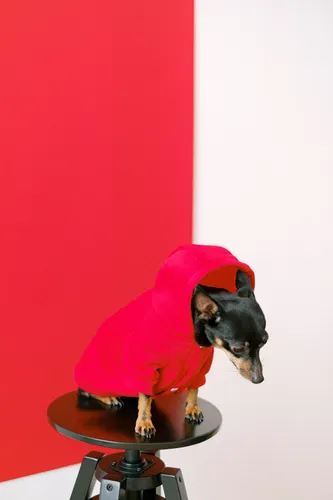
Accurate measurements taken at three points — neck, chest, and back — ensure proper fit and prevent discomfort.
You'll need a soft fabric measuring tape. Take three measurements:
Neck circumference — measure around the base of the neck where a collar sits. Add 1–2 inches for comfort.
Chest girth (most important) — the widest point around the chest, just behind the front legs. Add 2 inches for free movement. When between sizes, always size up on chest girth — restriction here is the most harmful fit error.
Back length — from the base of the neck to the base of the tail. Don't include the tail.
Compare measurements against the specific brand's size chart — sizing varies significantly between manufacturers. See our full Dog Clothing Size Guide for breed-specific reference charts.
Dog Fashion Trends in 2026
Streetwear and Athleisure
The dominant 2026 trend. Miniaturized versions of human athletic staples: logo hoodies, sporty colorways, athletic cuts in neutral tones. Shop it: Adidog BarkFit Hoodie — the Pets Sparkle signature athleisure piece.
Earth Tones and Neutral Palettes
The dominant color story: oatmeal, stone, sage green, terracotta, warm beige, slate grey. These coordinate beautifully with most dog coat colors and photograph effortlessly.
Matching Owner-and-Dog Sets
Exploded on TikTok and Instagram in 2025 and fully mainstream in 2026. Complementary pieces where owner and dog wear the same color palette, print, or garment style.
Statement Accessories
Not every owner wants to fully dress their dog — but a statement bandana, bow tie, or pair of sunglasses is the accessible entry point. The BarkRay Sunglasses offer UV protection with a photogenic aesthetic.
Functional-First Fashion
Products that work and look great: reflective hoodies for evening walks, waterproof raincoats with stylish cuts, cooling vests with sleek design.
How to Get Your Dog Comfortable with Clothing

Dogs who associate clothing with walks and positive experiences adapt quickly — the introduction process is the key variable.
Step 1: Introduction Without Wearing
Let your dog sniff and investigate the garment thoroughly. Treat any positive interaction with the item.
Step 2: Touch Desensitization
Touch your dog's back, legs, and belly with your hands while treating. This builds tolerance for clothing contact before the item is introduced.
Step 3: Brief Wear Sessions (30–60 Seconds)
Put the clothing on, immediately give high-value treats, and remove. Repeat many times over several days, gradually extending wear duration.
Step 4: Build Positive Association
Only put clothing on before positive events — walks, meals, playtime. The dog learns: clothing on = great things happening.
Step 5: Read Body Language
A comfortable dog moves freely, holds their tail at normal height, and ignores the clothing. An uncomfortable dog freezes, walks stiffly, tucks their tail, or constantly tries to remove the garment. Never push past discomfort — slow down the process.
Dog Clothing by Season
| Season | Ideal Clothing | Key Feature |
|---|---|---|
| Winter | Insulated hoodie, jacket, or vest | Warmth, wind resistance |
| Spring/Autumn | Light hoodie, raincoat | Light coverage, waterproof |
| Summer | Cooling vest, sun shirt | Breathable, UV-protective |
| Year-round | Accessories (bandanas, sunglasses) | Style, identity |
Quick Reference: Which Dogs Need What
| Dog Type | Winter Layer | Summer Protection | Accessories |
|---|---|---|---|
| Short-coated (Chihuahua, Greyhound) | Essential | Cooling vest recommended | Great for any dog |
| Brachycephalic (Pug, Bulldog) | Light only | Cooling vest essential | Great for any dog |
| Thick-coated (Husky, Malamute) | Usually unnecessary | Avoid layering | Great for any dog |
| Puppies and Seniors | Recommended | Monitor for overheating | Great for any dog |
Shop the full dog clothing lineup at Pets Sparkle Dog Clothing.
FAQ
Q: Do dogs actually need clothes?
Thin-coated, brachycephalic, senior, and post-surgical dogs genuinely benefit. Thick-coated northern breeds generally don't.
Q: Is dressing your dog safe?
Yes — with correct fit, appropriate fabric, and weather-appropriate use. Avoid overheating and ensure free movement.
Q: How do I get my dog comfortable with clothing?
Gradual positive introduction over days and weeks. Always associate clothing with walks and meals, never force, and read body language throughout.
Q: What are the biggest 2026 dog fashion trends?
Streetwear/athleisure, earth-tone palettes, matching owner-dog sets, statement accessories, and functional-fashion pieces.
Q: How do I measure my dog for clothing?
Three measurements: neck circumference, chest girth (most important), and back length. When between sizes, always size up on chest girth.
Related Posts
- Are Dog Hoodies Safe?
- How to Measure Your Dog for Clothes
- Dog Streetwear Trends 2026
- Matching Dog and Owner Outfits
About the Author
Pets Sparkle Editorial Team — Pet enrichment and care specialists with 5+ years of research, product testing, and content experience. Every guide is reviewed against current veterinary and behavioural science guidelines. | petssparkle.com
Sources: ASPCA — General Dog Care