Reading time: 6 min | Last updated: June 2026 | Author: Pets Sparkle Team
Table of Contents
1. What Is a Puzzle Feeder?
2. What Is an Enrichment Toy?
3. Side-by-Side: What Each Addresses
4. Why You Need Both
5. How to Build a Combined Daily Routine
6. Which Dogs Need More of Which?
7. FAQ
"Enrichment toy" and "puzzle feeder" are used interchangeably in most pet product marketing — but they're not the same thing. Understanding the distinction lets you build a more complete daily routine that genuinely meets all of your dog's cognitive and behavioral needs.
A complete enrichment approach should address five behavioral need categories: feeding, sensory, social, cognitive, and physical. Puzzle feeders and enrichment toys serve different categories — neither alone covers all five.
What Is a Puzzle Feeder?
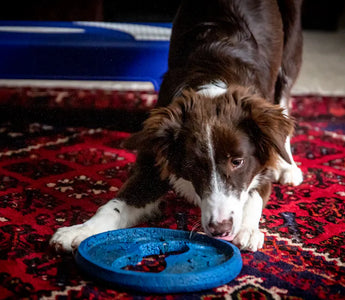
A puzzle feeder is specifically designed to hold food and require the dog to problem-solve to get it out. The primary purposes are:
1. Controlling eating pace (slowing fast eaters)
2. Providing feeding-time cognitive engagement
3. Enabling solo, calm, food-motivated enrichment
Examples: interactive slow feeder bowls, sliding-compartment puzzles, spinning treat puzzles, fill-and-freeze Kongs, lick mats.
The food is the reward — the puzzle is the mechanism for delivering it slowly and engagingly. The Brainy Puzzle Feeder is designed to maximize this cognitive engagement at every mealtime.
What Is an Enrichment Toy?
Quick answer: "Enrichment toy" is a broader category.
"Enrichment toy" is a broader category. A dog enrichment toy stimulates natural behaviors — sniffing, chasing, tugging, chewing, problem-solving — but isn't necessarily food-based.
Examples: tug toys, rope toys, squeaky toys, plush prey-mimic toys, ball launchers, hide-and-seek plushes, snuffle mats.
An enrichment toy may or may not involve food, and the reward is the behavior itself (the chase, the tug, the squeak, the discovery) rather than a food payoff. According to the ASPCA, toys that engage natural instincts provide genuine behavioral and psychological benefit beyond just distraction.
Side-by-Side: What Each Addresses
| Behavioral Need | Puzzle Feeder | Enrichment Toy |
|---|---|---|
| Mental problem-solving | ✅ High | ✅ Medium |
| Eating pace management | ✅ Primary purpose | ❌ |
| Physical exercise | ❌ Minimal | ✅ (type-dependent) |
| Social bonding with owner | ❌ Solo activity | ✅ Interactive types |
| Prey/chase instinct | ❌ | ✅ |
| Oral/chew instinct | ✅ Some types | ✅ |
| Solo calm occupation | ✅ Excellent | ✅ Medium |
| Calming/soothing effect | ✅ Lick-based types | ✅ Chew-based types |
| Anxiety reduction | ✅ Strong (food-based) | ✅ Medium |
Why You Need Both
The most common mistake owners make is relying exclusively on one type. A dog who only gets puzzle feeders develops cognitively but doesn't satisfy their prey drive, tug instinct, or physical exercise needs. A dog who only gets active enrichment toys gets physical outlet but no problem-solving engagement.
A dog whose routine includes only one type will still show signs of behavioral deficit — because the unmet needs don't disappear, they just find other expression (destructive chewing, excessive barking, anxiety behaviors).
A complete enrichment approach combines both: puzzle feeders for mealtimes and solo calm periods, enrichment toys for play sessions and active engagement. Browse the Pets Sparkle Dog Toys Collection for enrichment options to complete the picture.
How to Build a Combined Daily Routine
This daily rotation addresses problem-solving, prey instinct, chewing, sniffing, and bonding — every major enrichment category, across a single day.

Physical play satisfies behavioral needs that cognitive enrichment can't — both types are necessary for a complete routine.
Morning meal: Brainy Puzzle Feeder — 15–20 min of calm problem-solving to start the day
Late morning: 5–10 min tug or fetch with you (social bonding, prey drive)
Midday: Long chew toy or frozen stuffed lick mat (calm solo occupation)
Afternoon walk: Sniff walk — the nose is a powerful enrichment tool
Evening meal: Scatter feed on snuffle mat or second puzzle feeder session
Wind-down: Calm chew toy (bully stick, antler) while you relax together
This daily rotation addresses problem-solving, prey instinct, chewing, sniffing, and bonding — every major enrichment category, across a single day.
Which Dogs Need More of Which?
Prioritize puzzle feeders for:
- Dogs with separation anxiety (use as departure activity)
- Fast eaters and dogs prone to bloat
- Weight management cases where feeding pace matters
- Older, less mobile dogs who need low-impact cognitive engagement
Prioritize enrichment toys for:
- High-drive working breeds (Malinois, Border Collies, Terriers) who need physical outlet
- Puppies learning through physical play
- Dogs who aren't food-motivated (toy-driven dogs)
For anxious dogs specifically: Start with lick mats and puzzle feeders — calming, food-based, solo-capable, and low-frustration. Once baseline anxiety has reduced through consistent enrichment, layer in interactive enrichment toys for play sessions.
FAQ
Q: What's the difference between a puzzle feeder and enrichment toy?
A puzzle feeder holds food and requires problem-solving to access it. An enrichment toy stimulates natural behaviors (chase, tug, chew) and may or may not involve food. Both serve different needs.
Q: Do I need both?
Yes — each covers behavioral needs the other doesn't. A complete routine uses both daily.
Q: Which is better for anxious dogs?
Start with puzzle feeders and lick mats (calming, food-based). Add active enrichment toys once baseline anxiety is lower.
Q: Can enrichment toys replace walks?
On occasional low-activity days, yes partially. But not permanently — dogs need the sensory variety, physical movement, and social exposure that outdoor walks provide.
Q: How often should I rotate enrichment toys?
Every 5–7 days. Rotating between 4–6 toys maintains novelty and sustained engagement better than leaving all toys out at once.
Key Takeaways
- The single biggest predictor of success is owner consistency — doing the routine daily even on days you don't see immediate change.
- Mental enrichment matters as much as physical exercise. Both together produce results that neither delivers alone.
- For ongoing or severe issues, working with a vet adds tools (medication, behavioral protocols) that home interventions can't match.
- Most owners see meaningful improvement in 6–8 weeks of consistent work.
Related Posts
- Complete Dog Anxiety Guide
- Best Interactive Toys for Anxiety Relief
- How Much Mental Stimulation Does Your Dog Need?
- Daily Enrichment Schedule for Dogs
About the Author
Pets Sparkle Editorial Team — Pet enrichment and care specialists with 5+ years of research, product testing, and content experience. Every guide is reviewed against current veterinary and behavioural science guidelines. | petssparkle.com
Sources: ASPCA — General Dog Care