Reading time: 6 min | Last updated: June 2026 | Author: Pets Sparkle Team
Table of Contents
1. Sign 1: Meal Gone in Under 60 Seconds
2. Sign 2: Vomiting Right After Eating
3. Sign 3: Visible Belly Bloating After Meals
4. Sign 4: Excessive Pre-Meal Drooling or Pacing
5. Sign 5: Choking or Gagging Mid-Meal
6. The Most Effective Solutions, Ranked
7. When to See a Vet
8. FAQ
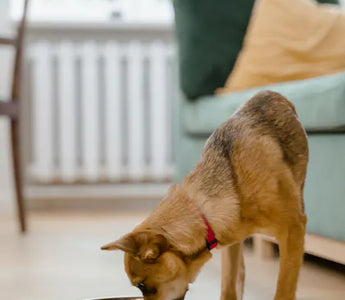
You set down the bowl. Two seconds later, it's empty. Some owners laugh it off as enthusiasm — but speed eating is one of the most common and preventable health risks in dogs.
According to PetMD, fast eating is directly linked to choking, vomiting, chronic bloating, and GDV — a life-threatening stomach condition. Here are the five clearest signs your dog is eating dangerously fast, and exactly what to do about each.
Sign 1: They Finish Their Full Meal in Under 60 Seconds
A healthy eating pace for an adult dog is 5–10 minutes for a full portion.
A healthy eating pace for an adult dog is 5–10 minutes for a full portion. If your dog clears their bowl in under a minute — especially if it's multiple cups of kibble — they're swallowing in chunks too large for proper digestion.
The fix: Switch to a slow feeder bowl or spread kibble across a snuffle mat. This single change typically extends mealtime from 30 seconds to 5–10 minutes with no other intervention required. Browse the Pets Sparkle Slow Feeders Collection.
Sign 2: They Vomit or Regurgitate Right After Eating
If your dog regularly brings food back up within minutes of eating — especially if it's undigested kibble that looks exactly as it did going in — fast eating is almost certainly the cause.
If your dog regularly brings food back up within minutes of eating — especially if it's undigested kibble that looks exactly as it did going in — fast eating is almost certainly the cause.
Note the difference:
- Regurgitation (immediately after, food intact) = fast eating problem
- Vomiting (20+ minutes later, partially digested content) = may indicate a different issue worth a vet check
The fix: A slow feeder reduces chunk size and swallowing speed. Soaking dry kibble in warm water for 5 minutes before serving also helps significantly.
Sign 3: Visible Belly Bloating or Distension After Meals
Quick answer: Does your dog's belly look visibly rounder or feel tighter after eating?

Air ingestion during fast eating causes the visible belly distension many owners notice post-meal.
Does your dog's belly look visibly rounder or feel tighter after eating? Do they seem reluctant to move, show discomfort when touched, or pass excessive gas? That's air-ingestion bloating from speed eating.
In most breeds, this resolves on its own — uncomfortable, not dangerous. In large, deep-chested breeds (Great Danes, German Shepherds, Weimaraners, Standard Poodles), repeated episodes can lead to GDV, which the AVMA describes as a surgical emergency requiring treatment within hours.
The fix: Slow feeders cut air ingestion per mealtime dramatically. Combined with splitting one large meal into two smaller ones and no exercise within 60 minutes of eating, the risk profile changes significantly.
Sign 4: Excessive Drooling, Pacing, or Spinning Before Meals
A dog who drools heavily, paces continuously, whines, or spins before their bowl is placed down is in an intensely hyper-aroused feeding state — and that arousal feeds directly into frantic, fast eating behavior.
A dog who drools heavily, paces continuously, whines, or spins before their bowl is placed down is in an intensely hyper-aroused feeding state — and that arousal feeds directly into frantic, fast eating behavior.
The fix: Use a "wait" or "sit-stay" command before placing the bowl down. Require 10–15 seconds of calm before the release word. A puzzle feeder like the Brainy Puzzle Feeder redirects this pre-meal energy into productive problem-solving behavior rather than a sprint to empty the bowl.
Sign 5: Choking, Gagging, or Coughing During Meals
Audible choking sounds, repeated dry gagging, or a persistent cough mid-meal or right after eating are clear signals that food is going down too fast and in pieces too large.
Audible choking sounds, repeated dry gagging, or a persistent cough mid-meal or right after eating are clear signals that food is going down too fast and in pieces too large.
While occasional gagging passes, persistent choking is a real risk — food can be aspirated into the airway.
The fix: A slow feeder bowl forces smaller bites. Soaking kibble softens it and reduces aspiration risk. For very fast dogs, a lick mat spread with wet food provides the most controlled eating pace of any feeding format.
The Most Effective Solutions, Ranked
Start with a slow feeder bowl from the Pets Sparkle Slow Feeders Collection — the highest-impact, zero-effort change.
| Solution | Effort | Effectiveness |
|---|---|---|
| Slow feeder bowl | None | ⭐⭐⭐⭐⭐ — immediate |
| Puzzle feeder | Low (1–2 week intro) | ⭐⭐⭐⭐⭐ — + mental enrichment |
| Split meals (2–3x daily) | Low | ⭐⭐⭐⭐ |
| Soak kibble in water | None | ⭐⭐⭐ |
| "Wait" command training | Medium | ⭐⭐⭐ |
| Muffin tin method | None | ⭐⭐⭐ (free option) |
Start with a slow feeder bowl from the Pets Sparkle Slow Feeders Collection — the highest-impact, zero-effort change.
When Should You See a Vet?
Consult a vet immediately if your dog: - Shows a hard, distended abdomen with unproductive retching (potential GDV) - Vomits more than 2–3 times per week post-meal - Has lost weight despite eating eagerly - Chokes severely during a meal GDV is a true emergency — if you suspect it, go to an emergency vet immediately without waiting.
Consult a vet immediately if your dog:
- Shows a hard, distended abdomen with unproductive retching (potential GDV)
- Vomits more than 2–3 times per week post-meal
- Has lost weight despite eating eagerly
- Chokes severely during a meal
GDV is a true emergency — if you suspect it, go to an emergency vet immediately without waiting.
FAQ
Q: How fast is too fast for a dog to eat?
Under 60 seconds for a full meal is dangerously fast. 5–10 minutes is a healthy eating pace.
Q: Why does my dog throw up right after eating?
Immediate regurgitation of intact food is a speed-eating problem. A slow feeder typically resolves this within 1–2 weeks.
Q: Can a slow feeder stop my dog from vomiting?
In most eating-speed cases, yes. Extending mealtime to 5–15 minutes reduces the volume and speed of each swallow dramatically.
Q: Is choking during meals normal?
Occasional gagging happens but it's not healthy. Persistent choking requires a slow feeder and possibly softened food. It's a real aspiration risk.
Q: Why is my dog so frantic before meals?
Hyper-arousal that feeds into fast eating. Require calm before the bowl goes down, and use a puzzle feeder to redirect the energy productively.
Key Takeaways
- The single biggest predictor of success is owner consistency — doing the routine daily even on days you don't see immediate change.
- Mental enrichment matters as much as physical exercise. Both together produce results that neither delivers alone.
- For ongoing or severe issues, working with a vet adds tools (medication, behavioral protocols) that home interventions can't match.
- Most owners see meaningful improvement in 6–8 weeks of consistent work.
Related Posts
- Complete Guide to Slow Feeder Bowls
- Slow Feeder vs Puzzle Feeder
- Do Slow Feeders Really Prevent Bloat?
About the Author
Pets Sparkle Editorial Team — Pet enrichment and care specialists with 5+ years of research, product testing, and content experience. Every guide is reviewed against current veterinary and behavioural science guidelines. | petssparkle.com
Sources: PetMD — Dogs Eating Too Fast · AVMA — GDV