Reading time: 6 min | Last updated: June 2026 | Author: Pets Sparkle Team
Table of Contents
1. Do Dogs' Eyes Need UV Protection?
2. Are Dog Sunglasses Just for Show?
3. What to Look for in Dog Sunglasses
4. Getting Your Dog to Actually Wear Them
5. FAQ
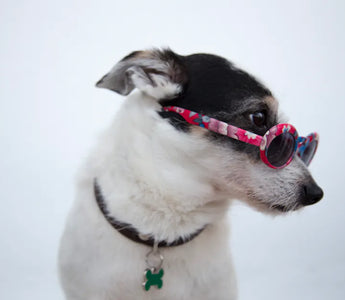
Dog sunglasses might look like the ultimate social media prop — and yes, they absolutely are that. But there's more to the story. Dogs can and do develop UV-related eye conditions, and for specific dogs in specific situations, eye protection is genuinely useful, not just photogenic.
Here's the honest, complete picture.
Do Dogs' Eyes Need UV Protection?
Dogs' eyes are susceptible to UV damage, though their natural corneal pigmentation offers more baseline protection than the average human eye. Specific conditions and situations significantly increase the need for protection:
Medical conditions that make UV eye protection genuinely useful:
Pannus (Chronic Superficial Keratitis): A UV-aggravated immune condition most common in German Shepherds, Border Collies, and Greyhounds, where UV exposure worsens corneal inflammation. veterinarians actively recommend UV-protective eyewear for dogs with this diagnosis — it's a genuine part of management.
Cataracts: UV exposure is linked to cataract progression in dogs, particularly as they age.
Post-surgery recovery: Post-surgical eyes are highly UV-sensitive; protective eyewear is often vet-recommended during the recovery period.
Dogs with light or blue eyes: Less melanin pigmentation means meaningfully more UV vulnerability.
Situations that increase UV exposure:
- High-altitude hiking (UV intensity increases approximately 10% per 1,000 feet of elevation gain)
- Water and snow reflection (both significantly amplify UV intensity)
- Long-duration direct sunlight activities
- Beach or open desert environments year-round

Dogs who spend time at the beach, in snow, or at altitude face meaningfully higher UV exposure than suburban dogs on short walks.
Are Dog Sunglasses Just for Show?
For the average dog doing 20–30 minute suburban walks? They're primarily aesthetic.
For dogs with pannus, post-surgical eyes, light-colored eyes, or who regularly spend time in high-UV environments (hiking, beach, snow)? They offer genuine functional UV protection.
Both are completely legitimate uses. The key distinction is choosing glasses with actual UV400-rated lenses — not purely decorative clear plastic. Decorative lenses can be worse than no glasses at all, as they dilate the pupil (reducing natural protective squinting) without providing any UV filtration.
What to Look for in Dog Sunglasses
UV400 Protection — The Only Specification That Matters
UV400 blocks 99–100% of UVA and UVB rays. If the glasses don't specifically state UV400 or UV protection, the lenses are decorative only — and potentially counterproductive.
Secure, Adjustable Fit
The most common complaint about dog sunglasses is that they fall off. Look for:
- Adjustable head strap or wraparound elastic bands
- Foam-padded frames that conform to the muzzle shape
- Flexible temples that don't pinch or create pressure points
Peripheral Coverage
Dogs have approximately 240-degree vision, significantly wider than human visual fields. Standard front-only lenses leave the sides unprotected. Wraparound or curved lens styles provide better coverage matching canine visual anatomy.
Polycarbonate Lenses
Lightweight and shatter-resistant — safer than glass if knocked around during play, and more comfortable for sustained wear.
Clear Nasal Area for Panting
Dogs must be able to pant freely while wearing eyewear. Frames should not interfere with the nose or obstruct the muzzle's natural movement during panting.
Getting Your Dog to Actually Wear Them
Sunglasses present a greater introduction challenge than most clothing because they cover the eyes — a particularly sensitive area for dogs.
Step 1: Let the dog sniff and investigate the glasses thoroughly for several sessions before attempting to put them on.
Step 2: Hold the glasses near their face (not on it) and treat generously for any calm behavior.
Step 3: Rest the glasses on their muzzle for one second, treat immediately, remove. Repeat this many times.
Step 4: Gradually extend wear duration, always treating and removing before frustration develops.
Step 5: Do first outdoor wears in a low-distraction environment — a quiet garden before a busy trail or beach.
Most dogs with patient, treat-heavy positive introduction will wear sunglasses comfortably within 1–2 weeks.
The BarkRay Sunglasses from Pets Sparkle are designed for both realities: UV400-protective lenses for genuine function, a secure wraparound design that stays on during outdoor activities, and a look that performs as well on a beach walk as it does on your camera roll.
View the full accessories range at Pets Sparkle Dog Accessories.
FAQ
Q: Do dogs need UV protection for their eyes?
Specifically: dogs with pannus, post-surgical eyes, light-colored eyes, or those regularly in high-UV environments (altitude, snow, beach). Average suburban dogs need sunglasses for photos, not medical protection.
Q: Are dog sunglasses just for show?
For most dogs: primarily aesthetic. For specific medical and high-UV situations: genuinely protective. Always choose UV400-rated lenses — decorative lenses without UV protection can be worse than nothing.
Q: How do I get my dog to wear sunglasses?
Gradual positive introduction with treats over 1–2 weeks. Start with seconds of wear and build up — eyes are sensitive, so patience is key.
Q: What does UV400 mean?
UV400 means lenses block 99–100% of all UV radiation up to 400nm (covering both UVA and UVB). It's the only UV protection specification that matters — everything else is decorative.
Q: Which dog breeds are most at risk for UV-related eye conditions?
German Shepherds, Border Collies, and Greyhounds (prone to pannus), and dogs with blue or light-colored eyes (Huskies, some Australian Shepherds, Weimaraners) who have reduced natural UV protection.
Key Takeaways
- The single biggest predictor of success is owner consistency — doing the routine daily even on days you don't see immediate change.
- Mental enrichment matters as much as physical exercise. Both together produce results that neither delivers alone.
- For ongoing or severe issues, working with a vet adds tools (medication, behavioral protocols) that home interventions can't match.
- Most owners see meaningful improvement in 6–8 weeks of consistent work.
Related Posts
- Complete Guide to Dressing Your Dog
- Dog Streetwear Trends 2026
- Matching Dog and Owner Outfits
- Are Dog Hoodies Safe?
About the Author
Pets Sparkle Editorial Team — Pet enrichment and care specialists with 5+ years of research, product testing, and content experience. Every guide is reviewed against current veterinary and behavioural science guidelines. | petssparkle.com
Sources: AKC — Dog Eye Health · ASPCA — General Dog Care