Reading time: 8 min | Last updated: June 2026 | Author: Pets Sparkle Team
Table of Contents
1. Before the Puppy Arrives: Non-Negotiables
2. Week 1–2: Training and Enrichment Foundation
3. Month 1: Personality and Style
4. What NOT to Buy (Save Your Money)
5. FAQ
You've decided to get a puppy. Congratulations — your home is about to be systematically investigated, your shoes are on borrowed time, and your sleep schedule is someone else's problem now.
Also: it's the best thing you'll ever do.
Bringing home a new puppy is equal parts joy and logistical overwhelm. The pet industry is enormous, every brand claims their product is "essential," and most new owners end up either buying a mountain of useless things or missing the few genuinely important ones.
Here's the actual list. In order of importance. With no padding.
Before the Puppy Arrives: Non-Negotiables
Have these before day one.
Have these before day one. Not "order them the same week." Before.
Safety and Containment
Collar with ID tag — the most important thing on this list. Your phone number. Current. On the dog. From the first day. (QR code tags that link to a full profile are a nice upgrade — more information, always updatable.)
4–6 foot standard leash — not retractable. Retractable leashes teach dogs that pulling extends their range. They'll spend the rest of their lives testing that theory. Get a regular leash.
Baby gates or exercise pen — puppies explore. They also destroy. Limit their territory while they're learning what's theirs and what isn't. You can expand their freedom as they earn it.
Crate — sized so they can stand, turn, and lie flat, but not big enough that they can use one corner as a bathroom. Crate training is one of the most valuable gifts you can give a dog. It creates security, independence, and a place they choose to go. Do it from the start.
Sleep
Dog bed or crate pad — warm, washable. A donut-style bed inside the crate works especially well for puppies settling in a new home — the surrounding walls mimic the den security that helps them calm down. Add a worn t-shirt with your scent for the first few nights.
Feeding
Food and water bowls — non-tip, easy to clean. But here's the thing: consider replacing the flat food bowl with a shallow slow feeder from day one. Puppies who learn that mealtimes involve a small challenge become dogs who genuinely enjoy working for their food. It's also better for their digestion and stops the speed-eating habit before it forms.
The Pets Sparkle Slow Feeders Collection has beginner-appropriate options. Start with the shallowest, simplest design.
Puppy-appropriate food — whatever the breeder or rescue has been feeding, continue initially. Transition slowly over 7–10 days if you change it. Abrupt switches cause digestive upset, which is the last thing you need during the already chaotic first week.
Week 1–2: Training and Enrichment Foundation
Once the first 48 hours of chaos have settled into something resembling a routine, add these.

Puppies introduced to enrichment feeding early adapt fastest and grow into dogs who genuinely enjoy the mental challenge of mealtimes.
Once the first 48 hours of chaos have settled into something resembling a routine, add these.
Training
High-value treats — small, soft, irresistible. Training requires a currency the puppy actually wants. The kibble they eat every day isn't it. Freeze-dried liver, small pieces of chicken, training treats from a pet store — test a few, find the one that makes their brain light up.
Treat pouch — clips to your waistband, keeps training rewards accessible. You'll thank yourself on every walk and session.
Clicker (optional) — marker-based training is more precise, but not essential. A verbal marker ("yes!") works fine if you're consistent.
Enrichment
Here's where most new puppy owners underinvest — and where it matters most.
Puppy-appropriate chew toy — puppies teethe. If you don't give them something appropriate to chew, they'll choose your furniture (which they'll find much more satisfying than you do).
Soft plush toy — comfort, gentle play, something to carry around with great pride.
Simple enrichment feeder — a snuffle mat or very shallow puzzle feeder introduces the concept of working for food early. According to the AKC, puppies who receive consistent cognitive enrichment show faster development and less destructive behavior than those who don't. Start simple. Build the habit.
Health
Vet appointment — within the first week. Initial health check, vaccination schedule, microchip if not already done.
Flea/tick prevention — ask your vet for an age-appropriate recommendation. Don't guess.
Pet insurance — set it up before the first claim, not after. Puppies have accidents. They eat things. Vet bills arrive without warning. Insurance during the first year is one of the best investments you'll make.
Month 1: Personality and Style
Once the foundations are solid, this is when your puppy gets to start being a character.
Once the foundations are solid, this is when your puppy gets to start being a character.
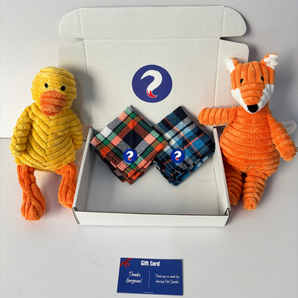
- Bandana or neckwear — the gateway accessory. Low tolerance required, instant personality. Fits any size.
- Puppy hoodie or sweater (if short-coated, in cold climate) — now is the ideal time to build clothing tolerance while they're young and impressionable
- Additional toy rotation — 4–6 toys on a weekly rotation. Novelty extends engagement significantly
- Slow feeder or puzzle feeder upgrade — if they've mastered the beginner feeder, step up the challenge. The Brainy Puzzle Feeder is the natural progression from a simple maze bowl — interactive enough to keep them engaged, accessible enough that the transition doesn't cause frustration
What NOT to Buy
Save your money. The pet industry has a lot of charming-looking products that accomplish approximately nothing.
Retractable leashes — they teach pulling, they're dangerous around cyclists and other dogs, and the mechanism breaks. Just don't.
Automatic/self-filling water bowls — you need to monitor how much your puppy drinks. Changes in water intake are early indicators of health issues. An automatic bowl removes that information.
Very complex puzzle feeders immediately — frustration at too-early an age creates negative associations with enrichment feeding. Start one level below what you think they can handle. Work up.
Expensive toys in bulk — puppies often ignore expensive toys and prefer the cardboard box they came in. Buy a few basics, observe what they like, then invest in more of those.
Puppy cologne or perfume — we promise, this is unnecessary. It can irritate skin and airways. Just wash the dog.
FAQ
Q: What do I need before bringing a puppy home?
Collar + ID tag, standard leash, crate, bed, shallow slow feeder, food, and a chew toy. Everything else can wait a few days.
Q: Should I start enrichment feeding from day one?
Yes. Puppies who learn mealtime involves a small challenge grow into dogs who genuinely enjoy it. Start with the shallowest, simplest slow feeder. The habit forms early.
Q: What should I NOT buy?
Retractable leash, self-filling water bowl, complex puzzle feeders too soon, expensive toys in bulk, and puppy cologne. Trust us on the cologne.
Q: When should I start training?
From day one. Short 5-minute sessions on name, sit, come, and leash manners. The socialization window (3–14 weeks) is the most important period — prioritize positive exposure during this time above all else.
Q: What should I expect from the first night?
Expect crying — it's normal. Help with a warm water bottle, worn t-shirt with your scent, and the crate near your bed. Don't open the crate to crying; wait for a quiet pause. Most puppies settle significantly by end of week one.
Key Takeaways
- The single biggest predictor of success is owner consistency — doing the routine daily even on days you don't see immediate change.
- Mental enrichment matters as much as physical exercise. Both together produce results that neither delivers alone.
- For ongoing or severe issues, working with a vet adds tools (medication, behavioral protocols) that home interventions can't match.
- Most owners see meaningful improvement in 6–8 weeks of consistent work.
Related Posts
- Essential Dog Accessories Guide
- Complete Guide to Slow Feeder Bowls
- How to Introduce a Slow Feeder
- How Much Mental Stimulation Does Your Dog Need?
About the Author
Pets Sparkle Editorial Team — Pet enrichment and care specialists with 5+ years of research, product testing, and content experience. Every guide is reviewed against current veterinary and behavioural science guidelines. | petssparkle.com
Sources: AKC — Mental Stimulation for Dogs · ASPCA — New Puppy Guide